

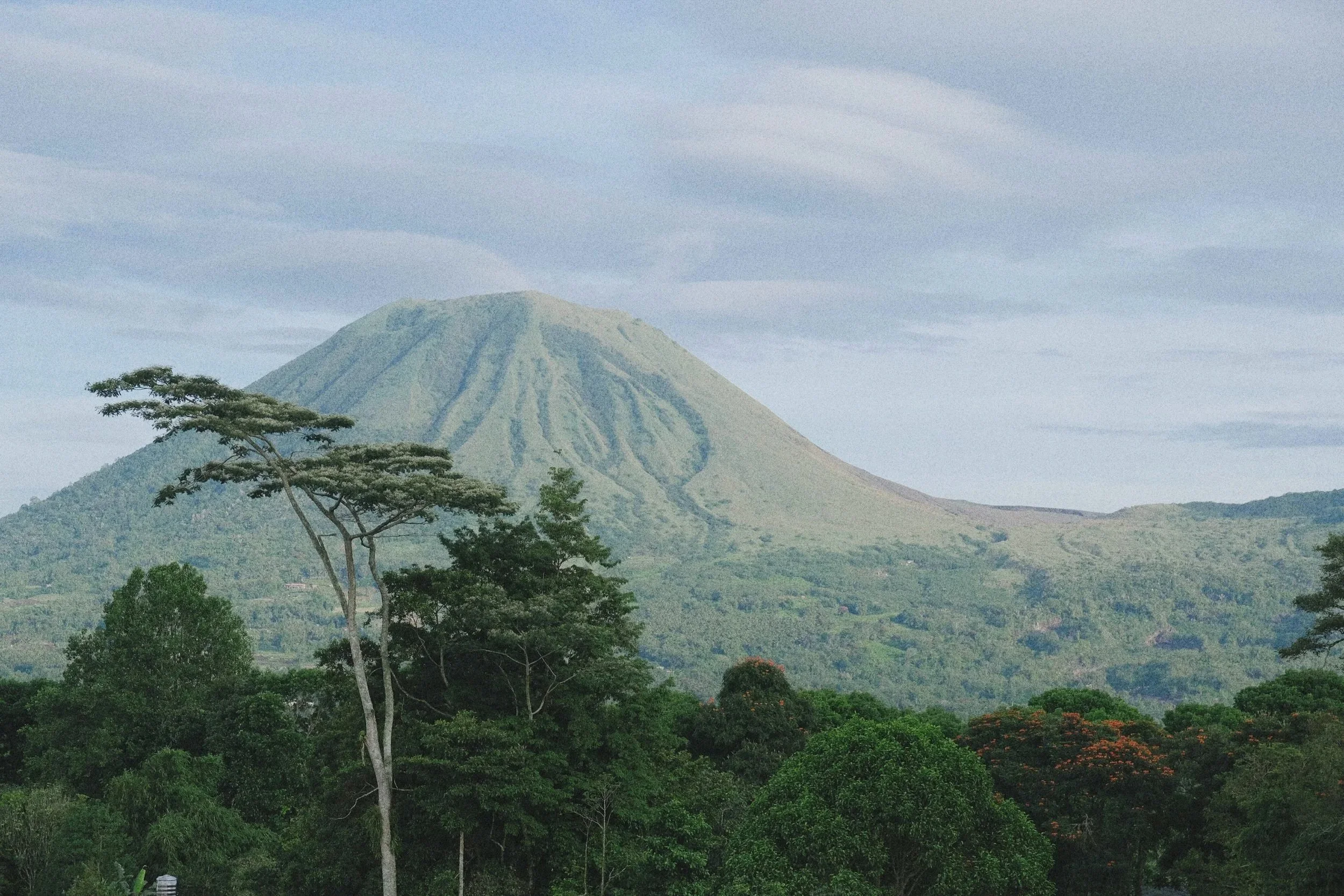
FLORES
[ FLORES' COFFEE HISTORY ]Early 20th-century Dutch efforts brought coffee to Flores, planting seeds in the volcanic highlands of Bajawa’s Ngada region during the colonial twilight.
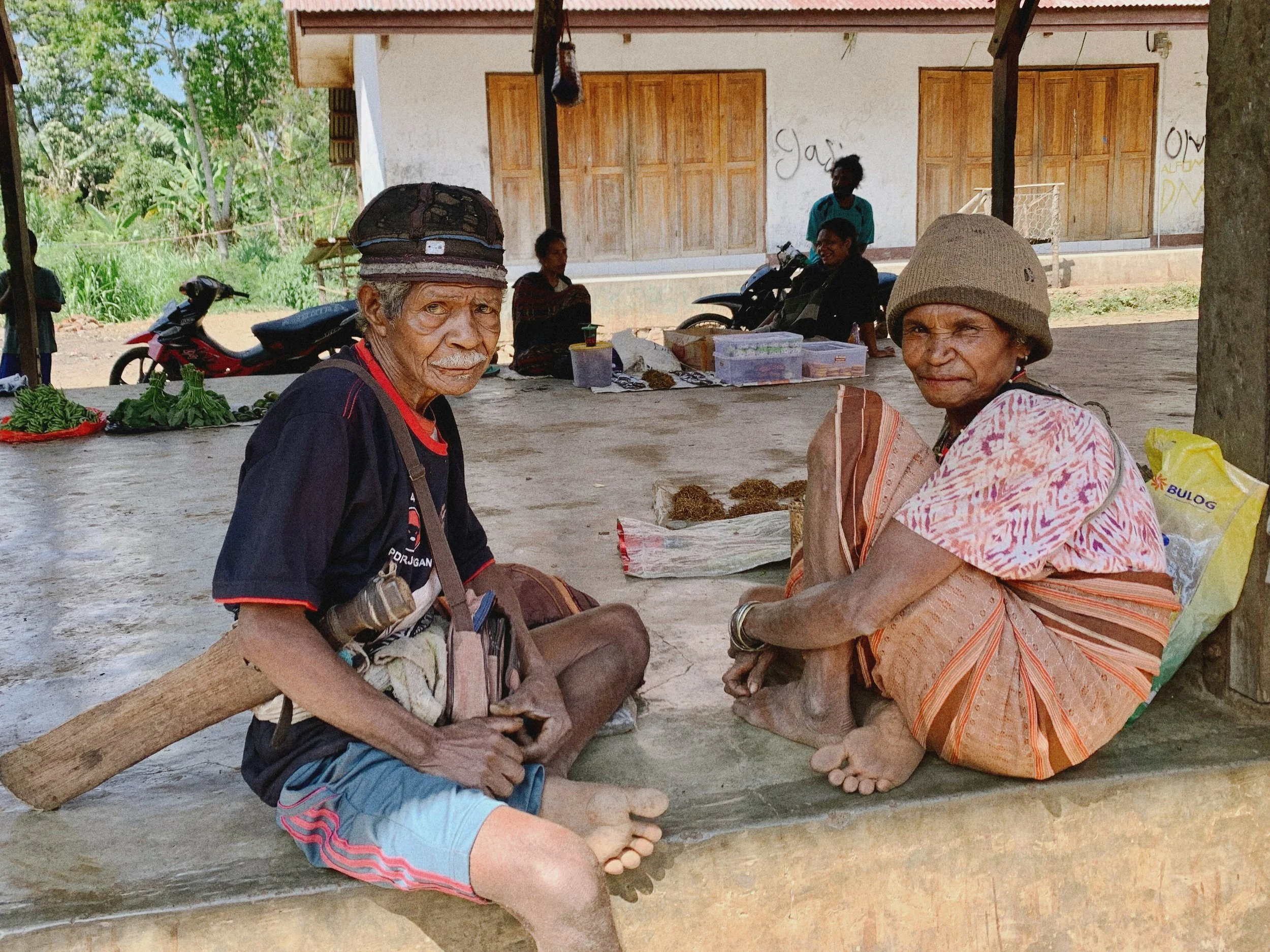
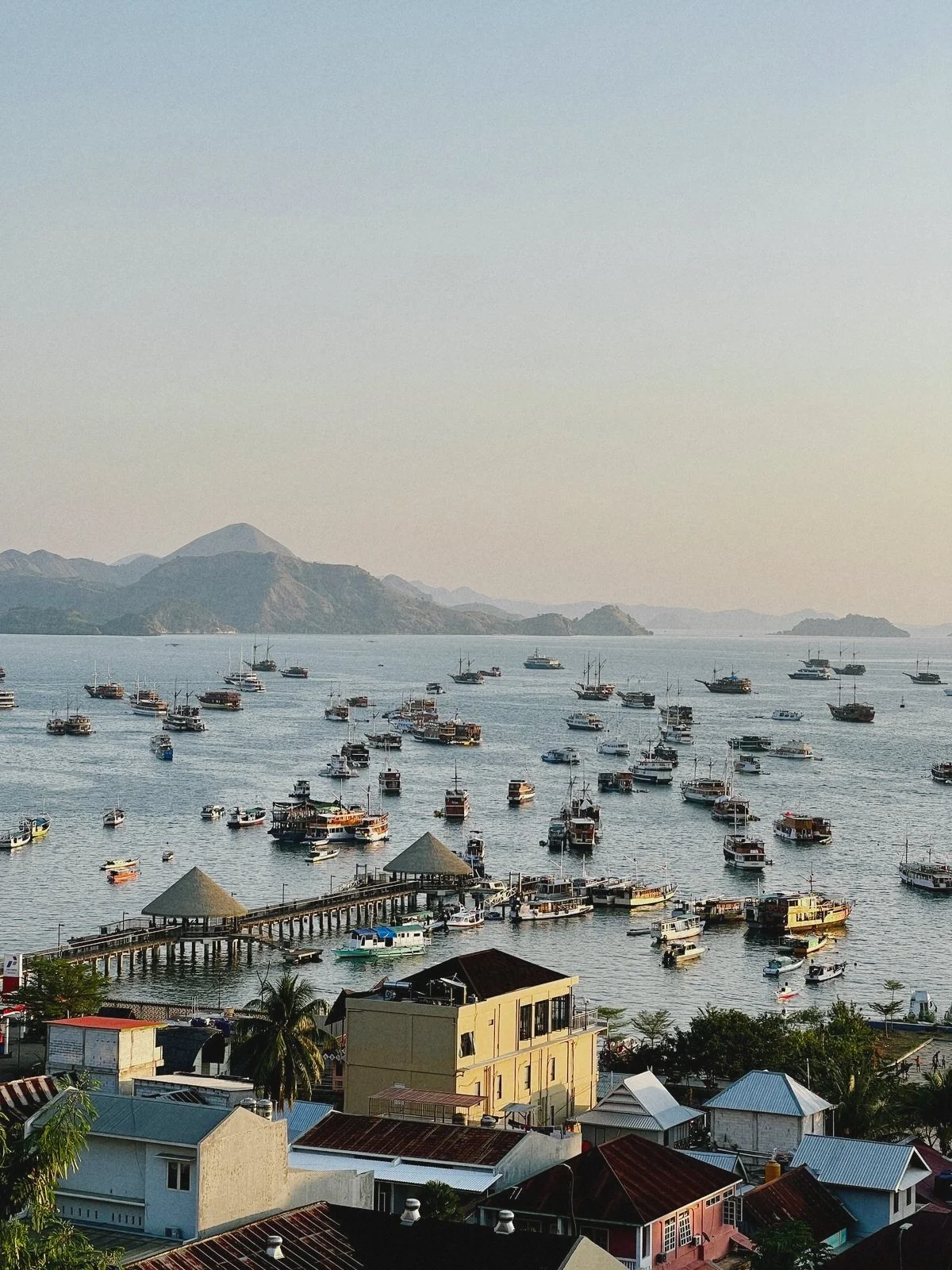
The island’s dramatic terrain and fertile soils proved welcoming, and over time, family-run plots supplanted initial estates.
Bajawa’s beans quietly earned acclaim for their poised, clean expression.
In this quieter corner of Indonesia, coffee endures as an elegant legacy of colonial spread, now refined through local stewardship.
[ oRANG FLORES ]Dubbed the Flower Island, Flores blends soaring volcanoes, intricate spider-web terraces, and layered traditions among Manggarai and Ngada peoples—who weave Catholic beliefs with indigenous reverence.
Their terrace systems reflect centuries of collective ingenuity and resilience. Mountains are viewed as sacred charges; coffee groves receive similar guardianship—small, inherited plots nurtured alongside other crops with patience, gratitude, and community cooperation that has defined life here for generations.
[ flores coffee ]Indonesia ranks among the world’s top coffee producers, exporting millions of bags yearly. While Sumatra’s robusta leads in volume, Flores adds a small but special share — about 30,000 bags of Arabica annually from the Bajawa highlands.
Every cherry is carefully hand-picked by smallholder families on tiny plots. This selective harvest reflects the same patient care given to the island’s sacred mountains and spider-web terraces.
[ star of origin ]Bajawa Arabica
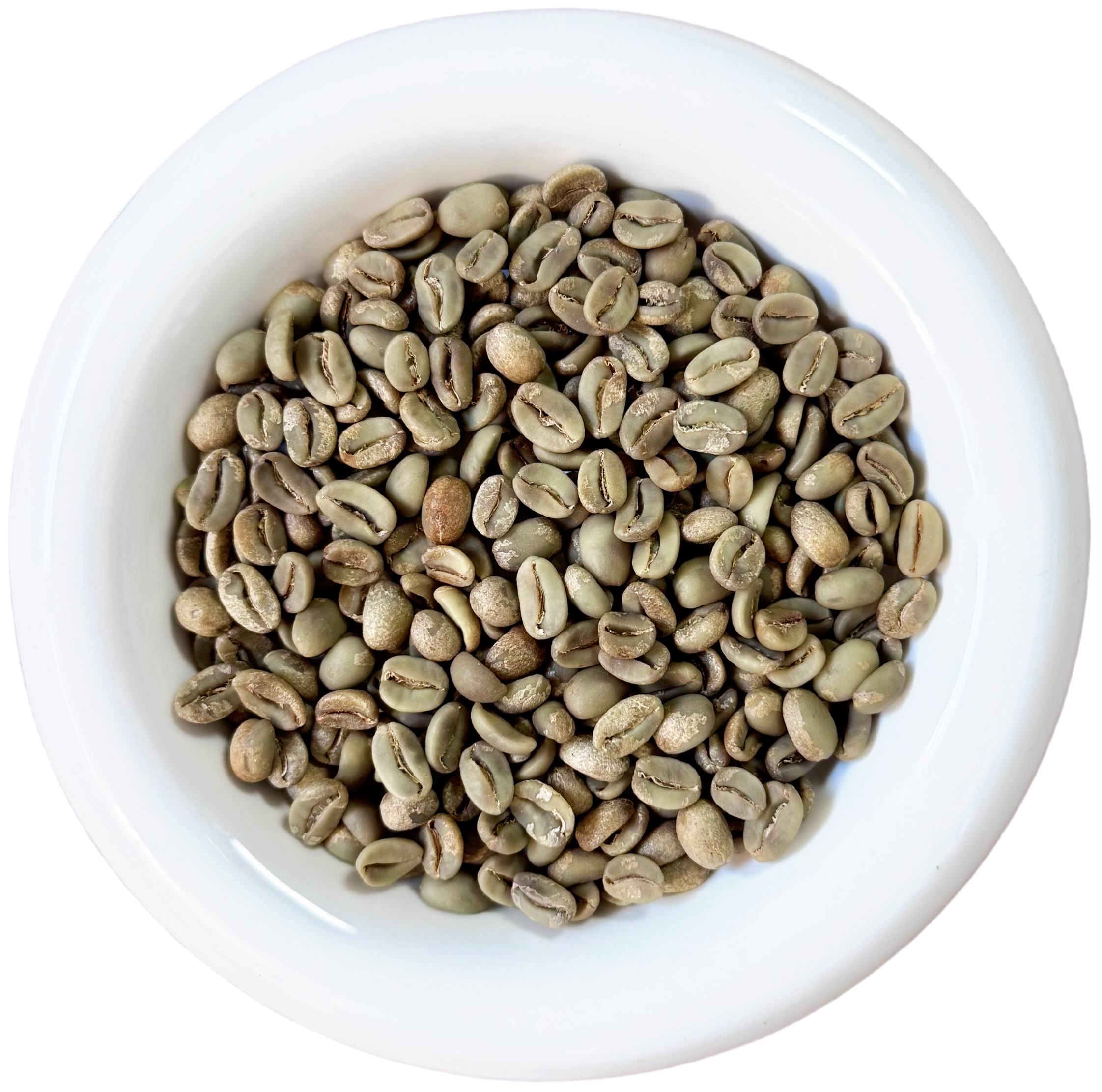
At 1,200–1,800 meters around Bajawa, volcanic soils and cool altitudes coax even ripening from these cherries.
The full-wash method—precise pulping, fermentation, thorough rinsing, and careful drying—maximizes transparency and finesse.
The cup reveals sweet chocolate, delicate florals, faint earth and wood, a syrupy mouthfeel, and soft acidity—clean and uplifting, reminiscent of wandering misty gardens on the Flower Island.